
The Mother Whale
For Bereaved Mothers on Mother’s Day

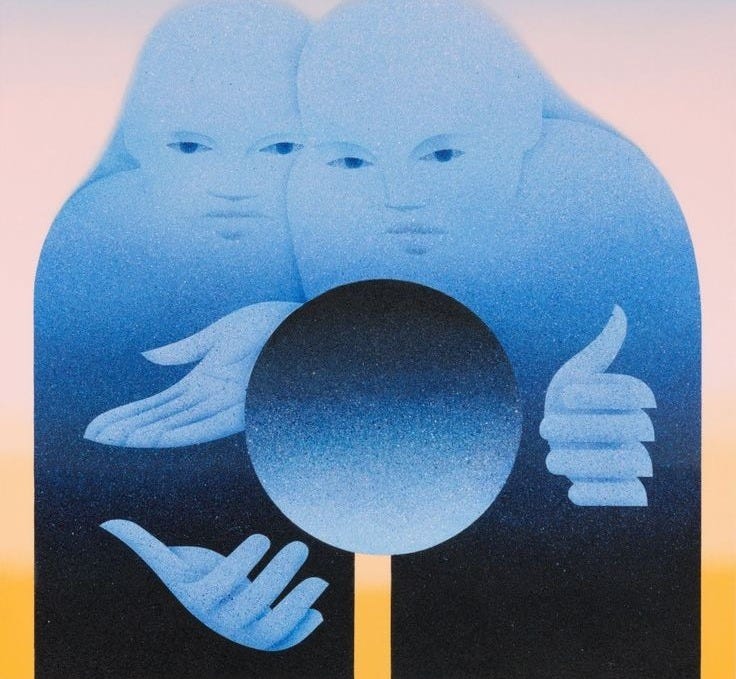
When I was a new parent, I counted forward. That is what parents do. We count the firsts. The first time they open their eyes. The first time their hand wraps around our finger. Their first sounds.
The first lost tooth.
The first day of school.
The first time they drive away by themselves.
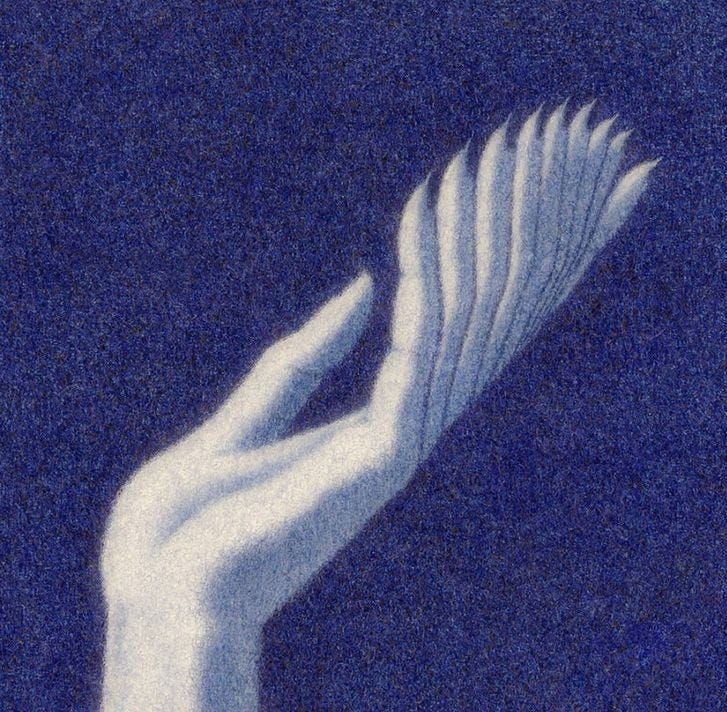
I was too enchanted to understand that every first is a composite creature, carrying its own “last” tucked secretly under its wing. A hidden twin. You only see it later, when it’s already gone… the last bedtime story, the last bubble bath, the last time they called me “mommy” instead of “mom.”
These endings passed quietly through our lives unnoticed.
Since losing our youngest son, Danavir, I am learning to live inside the simultaneity of firsts and lasts. Everything is coming towards me and disappearing at the same time.
This is my first year without him, and the last time I will ever be able to say that. There was our last ordinary day together. And the first time I spoke his name in the past tense to a stranger.
Grief cannot be faced head-on for very long. It’s too much reality all at once. The body takes the shock downward, into deeper chambers. The place animals go when they’re wounded. The place seeds go in the winter. The place where myth sends swallowed people.
To the belly of the whale.
belly
The belly is a place of process. It’s not exactly a “moving through” situation. Things soften unevenly and at their own pace. I’m being slowly broken down by something that is also, in its own strange way, trying to keep me alive. This is the paradox of the belly.
Something enormous swallows you, but it also spares you from drowning.
Whales have multiple stomachs, separate chambers for processing. My grief asks for this kind of tending. One chamber for shock. One for disbelief. One for memories. One for the tasks of living.
No single part of me can hold all of it at once.
Joseph Campbell once described artists as digestive organs of the culture. Art is one of my metabolizing chambers. Seven years ago I started writing a song and I just finished it, seven months after Danavir’s death.
This is my first Mother’s Day without him, and sharing this song with you feels like a gift to me. It’s called The Falling of the Whale.
A song about grief, surrender, and the mother whale.
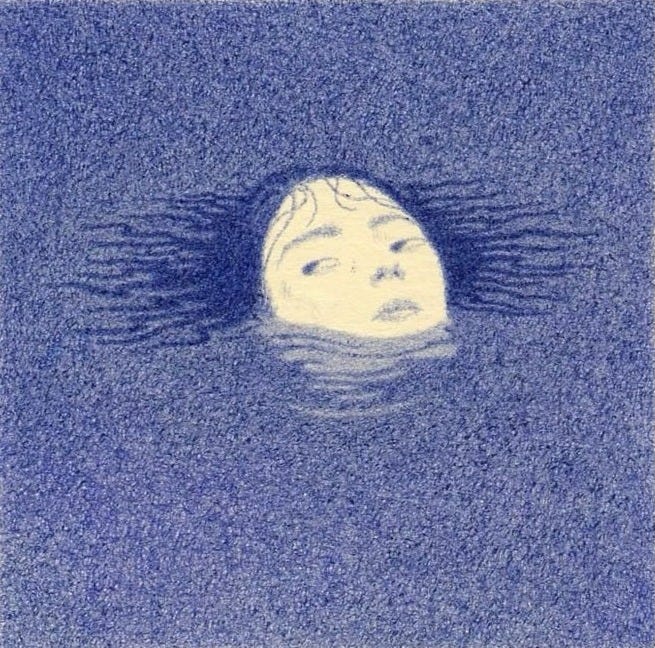
falling
The whale has long been my companion in grief. After their last breath, the whale’s enormous body (largest of all animals), is buoyant for a moment, then begins to fall. For hours, over miles, it descends to the ocean floor. This is called a whale fall.
In the first months, scavengers arrive, grazing the soft tissue down to the bone. For years the bones seep oils and nutrients, drawing in new life to make a home in the bones. Over decades, an ecosystem blooms.
New species emerge and eventually a reef forms where the body once was.
The whale taught me that there is a depth in me that knows how to receive loss. That surrender, irrational as it might feel, can be life giving. This image carried me through the deaths of my parents, my grandparents, and a few beloved friends.
But then…my child died.
And there has been no descent. Yielding feels impossible. His twenty-year-old bones had just reached full length. It was only yesterday he’d lost his milk teeth. They are still here, little white moons in a jar in the basement.
What’s descended instead is everything else.
The invisible beams that held tomorrow in place have come undone. Everything drifts through an interior sea, appearing and disappearing in tides of thought and memory.
With nowhere to fall, my grief can’t settle. It blooms midair in front of me. A dark flower opening, threading itself through everything I once saw as separate. What remains is a sense of immediacy.
Everything is now lit from the inside by the knowledge that my contact with it is brief and extraordinary.
I look out my window into the small stretch of forest. The trees are leafing out now. Some have pale scars in their bark. His old opponents. He used to fight them with stick swords and throwing stars.
Between two branches, a spider is rebuilding its web and I remember our boy… full of voltage, swinging a branch through the air, then stopping to ask how a heart could fit inside a spider body without bursting them.
It’s as if he is everywhere. Present in the charge of things. It would be easy to dismiss this as projection but it doesn’t feel like that from the inside. In a strange way, what was lost has become wildly, uncontrollably available.
My child is no longer contained.
While this sounds like a comforting thought, the lived experience of it is not. I want him contained. I want coordinates. A location. A place where I can say there he is and reach for him.
*When I refer to motherhood here, I mean anyone who has gestated and birthed life, regardless of gender identity. Mothering is the embodiment of creation and the work of carrying life forward.
reaching
Reaching is a mammalian instinct. When a whale calf dies, the mother doesn’t release her baby right away. She carries their small body on her head, along her back, nudging it upward. Again and again, she lifts the little body toward the surface so it can breathe, even though she knows it can’t.
This can go on for days. Sometimes longer. She stops eating. She stops migrating. She circles, and surfaces, and tries again.
This is called epimeletic behavior. The long vigils that mammals keep, attending their dead. I cannot stop thinking about that word. Attending. Staying with. Refusing disappearance. The mother whale, reaching for her baby, keeps repeating the last gesture she understands:
Stay.
Stay here.
Stay in the light.
When we lose a primary attachment, we aren’t carried immediately into the wisdom of the deep. We are not, at first, capable of surrender. We are, quite simply, the mother whale circling the site of rupture again and again, unable to comprehend a world without our beloved.
This mammalian instinct is love in its most unadorned form. Devotion stretched to its breaking point. I see it everywhere now.
We’re living through an epimeletic era. Mothers at borders. Mothers in bombed cities. Mothers digging through rubble with their bare hands, calling names into concrete.
Every war multiplies this grief. Every bomb creates bereaved mothers. Every mother searching through debris for her child is the mother whale, lifting what she can toward the surface saying, this was a life.
This was my child.
Look. Stay. Don’t turn away.
But something in us still looks away.
We haven’t been taught how to remain in the presence of grief. Our literacy for it is thin. We have so few rituals of staying, so few customs of attendance.
As a bereaved mother, I have learned how lonely this can feel. Many people don’t want to bring it up, as if naming the dead might injure the living. Others listen in order to respond. Searching for the consoling phrase that might move the pain somewhere out of sight. I can feel the retreat as it’s happening.
Like the moment before a hand lets go.
What if, instead of ushering grief toward closure, we stayed? What if grief became a commons rather than a pathology? What we practice in the heart scales outward.
The cry of one grieving mother in Palestine is not separate from the grief of a whole people, a whole landscape, an entire species disappearing from the world (the southern day frog, the african forest elephant, the red wolf)
The mothers cry is one place where the whole wound becomes audible. If we scroll past because there are errands, deadlines, and emails, then we are practicing disappearance. We’re training ourselves to abandon love at the very moment it needs witnessed.
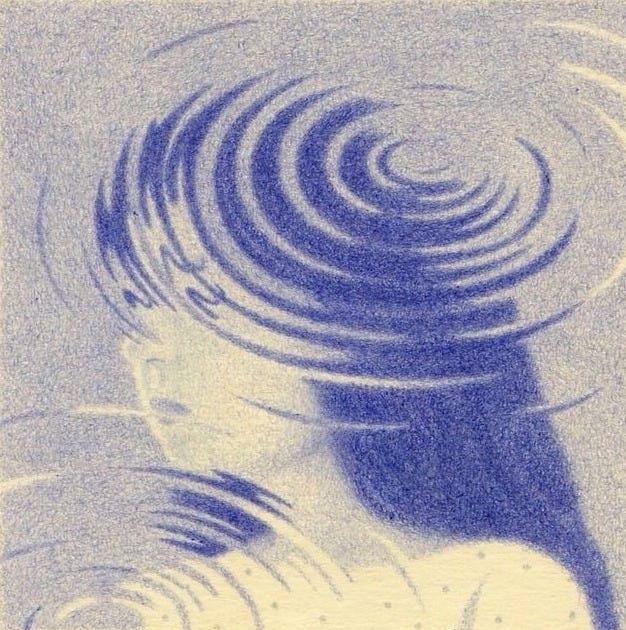
attending
I recently heard Robin Wall Kimmerer say that gifts and responsibilities are coupled. If life is a gift, then grief may be one of the responsibilities of having received it.
Tending to what has disappeared is one way of resisting further disappearance. If we can stay with our own heartbreak, perhaps we could accompany each other in loving what is still here, what is fragile, or failing, or may not survive.
Perhaps we could become the kind of beings who do not abandon. Like the mother whale who will not allow the small body of her baby to slip away.
She keeps carrying it.
She keeps lifting it toward the light.
And she begins to sing.
singing
Her low lament moves through the water in long dark ribbons. From far distances, other whales come, drawn by the ache in her voice. They gather around the mother and her impossible cargo. They circle. They offer their vast bellies.
Their soft bell bodies become chambers for the sound. Together, they become an organ of grief. The mother’s sorrow moves through them as shared pressure. The whole ocean becomes a womb for mourning.
Eventually, the mother loosens her hold and the small body drifts in the upper waters. But release has its own tide. There is a threshold between carrying and surrender and she crosses it slowly.
She returns, lifting the body when it begins to sink, hovering beneath it, remaining near until the small body is absorbed back into the living waters it came from.
Long after the calf is gone, the mother’s song continues.
She sings because there is no returning to the world except through the wound. It holds the outline of her child the way a shell holds the memory of the sea. The curve of love. The remembered weight. The hush of having once been filled.
The Falling of the Whale is my lamentation song. My ribbon of dark water. My way of sending my love outward where grief stops being private.
Grief is a vibration looking for kin. For bodies willing to receive it. We owe it to this gift of life to bring grief out of isolation. To let the heart be hollowed into resonance. To allow another’s sorrow to cross the border of us and find, inside, a chamber where it will not be exiled.
We are acoustic beings.
When we resonate together we change the chemistry of the water. And the distance between us is no longer distance. It becomes the dark between the stars. The invisible pull of moon and ocean. And the vast expanse through which we reach for one another.
In the spirit of the mother whale, I offer this beautiful conversation between Mohawk midwife Katsi Cook and Indigenous scientist Robin Wall Kimmerer
Women Are the First Environment.
https://www.pbs.org/video/first-environment-ct4sus/
If this piece touched you, please consider supporting it by becoming a paid subscriber, sharing this piece with someone who needs it, or liking/ leaving a comment. I am writing from a life changed by grief, and your support helps me continue. Thank you so much to those who already subscribe and support my work. It means more than I can say right now.
PS 💓 One-time donations are also deeply appreciated through the links below.
I felt this deeply, dear Oviya. The song is gorgeous, your words are profoundly beautiful. Thank you.
Such a beautiful piece of writing and expression of love.🙏